
SO WE’RE ALL SPRITZING NOW…HOW THE HELL DID THAT HAPPEN?
Ten years ago I couldn’t give an Aperol Spritz away behind the bar. Now it’s on every menu in the state. Here’s what actually happened in between...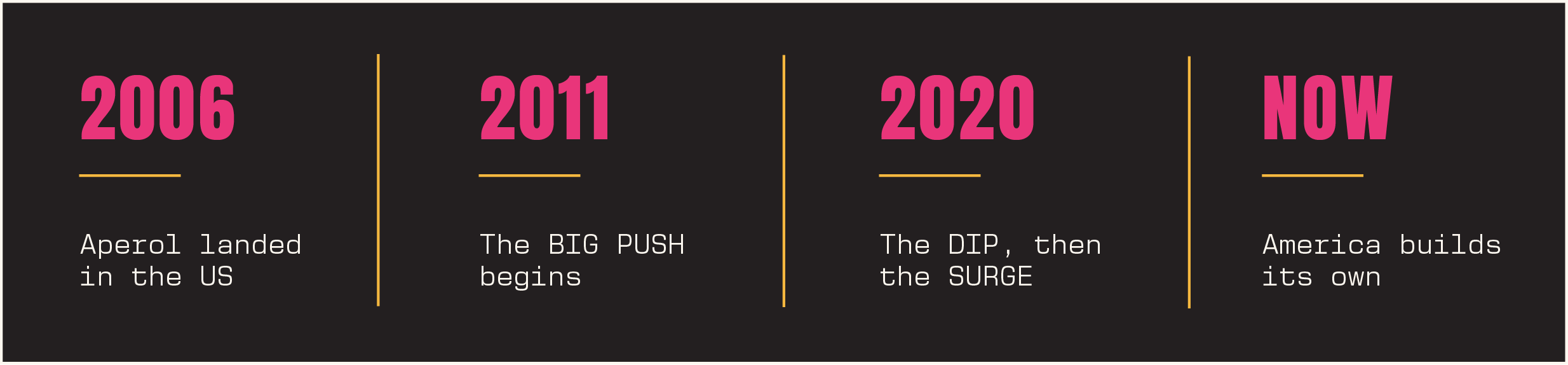
PART 01.
APEROL SHOWED UP HERE IN 2006
Most people assume Aperol is some new import that rode in on the spritz trend. IT’S NOT. Campari’s owned the brand since 1919, and it has been a normal part of an Italian evening for about a century. It just took a long time to get here.
Campari Group officially brought Aperol into the US in March of 2006, but for the first few years it barely moved. It sat on a handful of back bars as a curiosity nobody ordered. The REAL PUSH didn’t start until 2011, when Campari decided to sell the whole spritz, not just the bottle - orange Vespas showing up at events, sampling tours all summer, the brand parked at every party that would have it. THAT WAS FIVE YEARS OF TRYING BEFORE THE MARKETING REALLY KICKED IN.
PART 02.
NOBODY WANTED IT IN THE BEGINNING
I was behind the bar for this part - and I can tell you honestly, it DID NOT work right away.
In 2011 and 2012, if you put an Aperol Spritz in front of a guest, they usually didn’t finish it. Americans were used to sweet, high proof, spirit forward drinks, and that bitterness just didn’t land with most people. Customers flat out didn’t like it.
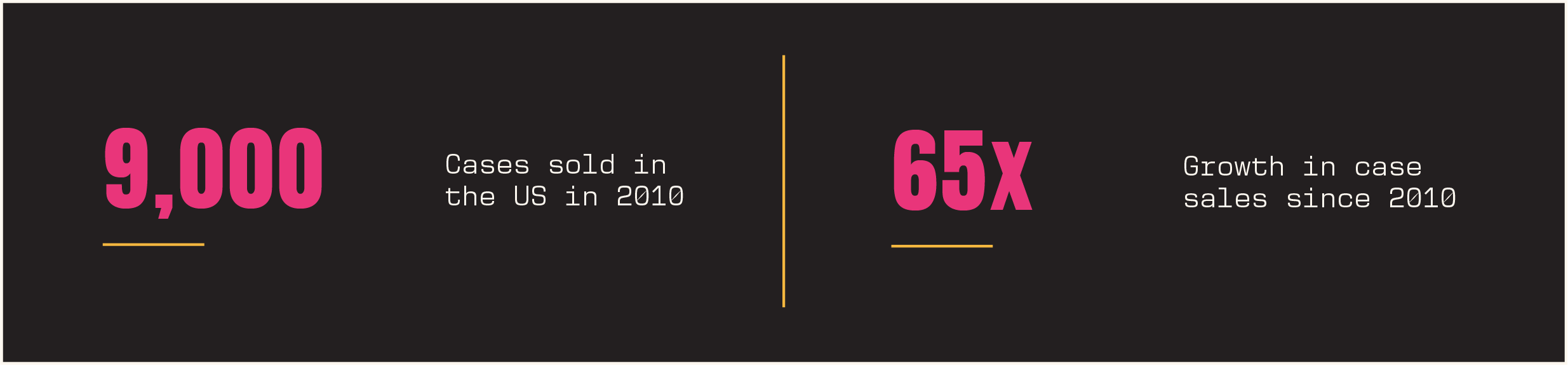
Nine thousand cases in a country this size doesn’t even register. And it wasn’t really about the drink itself, it was that there was no context for it yet. We didn’t have an aperitivo hour in this country. We had happy hour, and happy hour just ran on sugar and volume, not bitterness and restraint. YOU CAN’T MARKET YOUR WAY AROUND A HABIT THAT JUST DOESN’T EXIST YET.
“Its been a slow burn over time to get AMERICAN consumers into bitter spirits”
- A New Orleans bar manager, on the decade it took -
PART 03.
THEN COVID ACTUALLY HURT IT…AT FIRST
This is the part people get wrong when they tell the story. It wasn’t a straight line up.
In 2020, when bars and restaurants shut down, Aperol took a hit right along with the rest of Campari’s on premise business - the company’s overall sales that year came in down a few percent, mostly because a bottle that lives on outdoor patios and rooftop bars doesn’t do much sitting in a locked restaurant.
What actually built the category was what happened after. Once things reopened, people didn’t just go back to ordering spritzes out - they had spent a year building their own home bars, and a lot of them had picked up the habit of making one at home for themselves. Aperol came back up over pre pandemic levels FAST, up around 26 percent versus where it stood in 2019. From there it just kept climbing, all the way to roughly 604,000 cases by 2024, somewhere around 65x what it was doing back in 2010.
PART 04.
WHERE IT’S HEADED NOW
Aperol got people used to the format. Now bartenders are running with that same idea but using other bottles.
-
Elderflower and mint instead of bitter orange. It’s softer and more floral, and it’s pulling the guests who still aren’t sold on Aperol.
-
Same low ABV, slow down and sip energy, is pulling vermouth off of the back shelf. I’m seeing it being poured straight over ice, or worked into lighter versions of classic cocktails.
PART 05.
NEXT UP - AN AMERICAN APEROL
Almost every bottle driving this category right now is European. Aperol, Campari, Select, Cocchi - all coming from the same handful of Italian and French houses. THAT’S ABOUT TO CHANGE. I think we are going to start seeing American made aperitifs take a real share of this space.
Munyon’s Paw-Paw is one I really enjoy, a Florida made aperitivo that’s built to mix, not just sit on the back bar as a talking point. It’s a good sign of where this category is headed next.
CLOSING THE LOOP with THE PALM BEACH SPRITZ
If there is a lesson in all this, it’s that the format matters more than any one bottle. Here’s our take on it, built around the American aperitif making the case for what’s next.
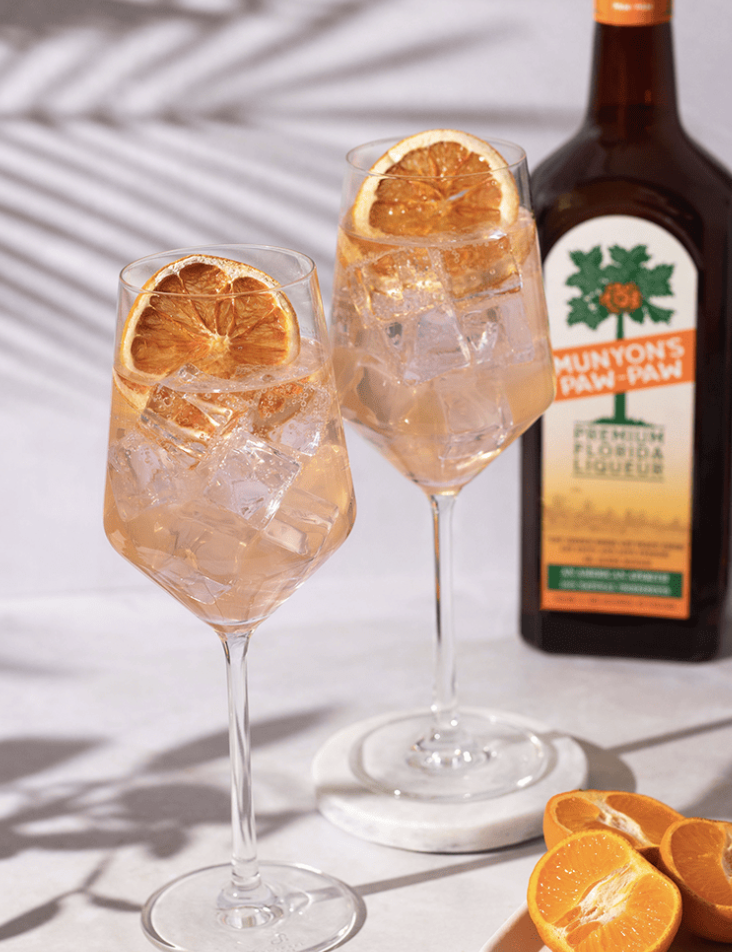
THE PALM BEACH SPRITZ
MUNYON’S PAW-PAW
GRAPEFRUIT SODA (FEVERTREE)
PROSECCO
Fill a wine glass with ice. Pour equal parts of all three ingredients over the ice. Give it one gentle stir to combine, don’t overwork it if you want to keep it bubbly. Garnish with an orange or grapefruit wheel.CHEERS TO SPRITZING!
- IT’S WHAT WE DO AT BOOTLEGGREG COCKTAIL CO. -